SearchUser loginNavigation |
Exploring Maple Sugaring in MaineType of Post:
Best of Show
We spent two Saturdays exploring the sugarhouses of southern Maine learning the intricacies of maple syrup making. We visited Hilltop Boilers in Newfield, Cooper's Royal Heritage Farm in Windham, and Goranson Farm in Dresden. It was a lot of fun, and very interesting. Here's what we learned.
In some places you see yards and yards of plastic tubing strung among the trees like an enormous spider web; this greatly reduces the labor of trekking out into the snow to retrieve the contents of hundreds of buckets. You might think it's not very picturesque, but your opinion might change if it were your turn to go empty the buckets on a frosty New England morning!
Some syrup-makers use oil-fired evaporators, but wood is a renewable resource typically in plentiful supply on the farms where syrup is made. There's nothing quite like the smell of wood smoke and boiling maple sap on a cool March morning to say "spring's coming!" Increasing numbers of farms are now using sophisticated reverse-osmosis (RO) equipment to extract pure water from the sap. This enriches the sap so it requires less boiling time and less fuel. It also means more light syrup and less of the overcooked B-grade that fetches a lower price. Other farmers do not use RO for a variety of reasons, and many have very strong feelings on the subject. 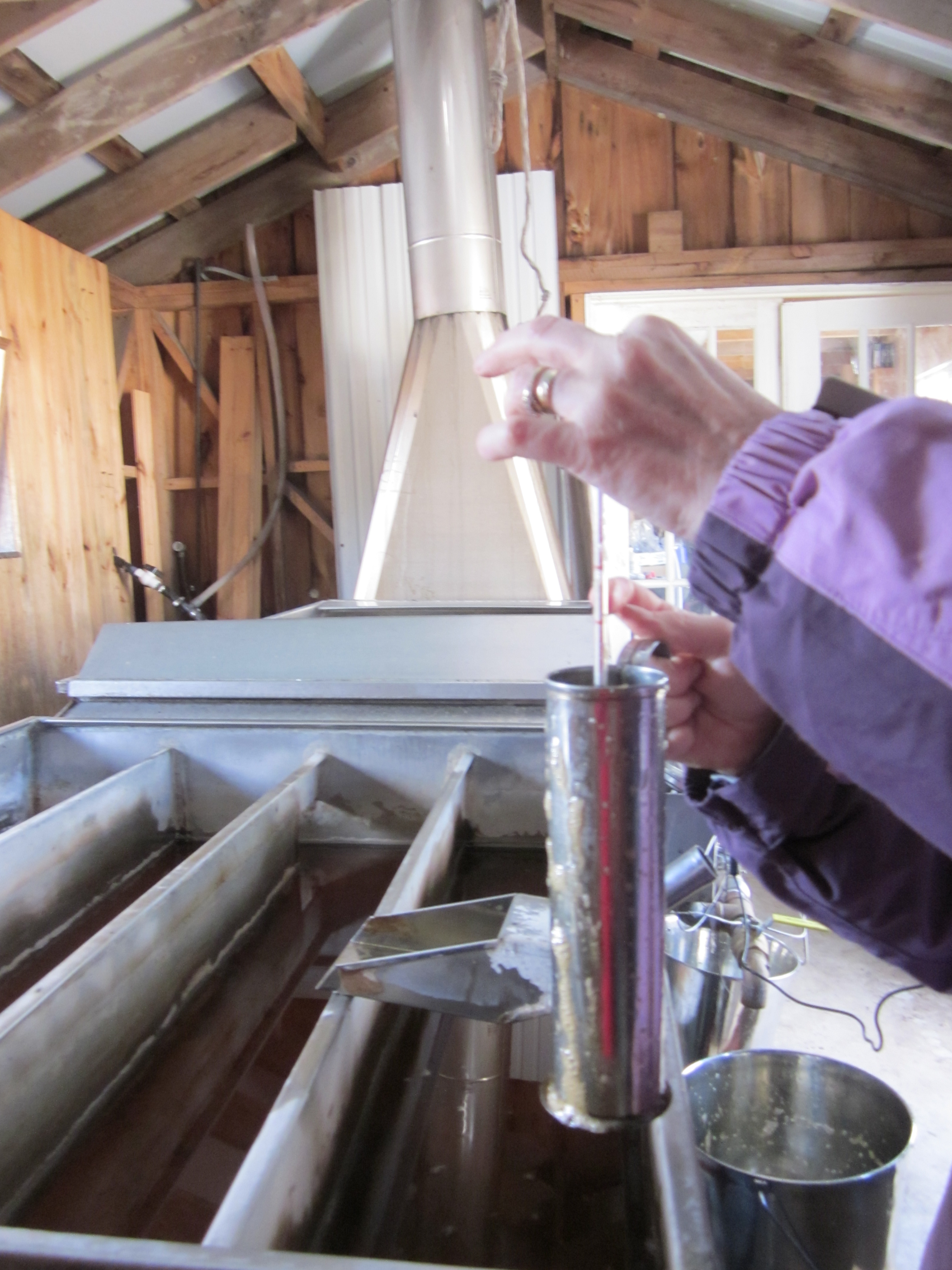 Gaylene Cooper showed me the equipment and explained the process from tap to bottle.
There's a lot of confusion about grades of maple syrup. The first thing to know is the syrup all has the same sugar concentration, but the sugars are not all the same. The longer it boils, the darker it gets. Grade A Light Amber (Fancy in Vermont) comes from sweet sap early in the season that does not have to boil very long. The flavor is more complex and delicate. The darkest syrup is not sold to retail customers; it is sold to processed food makers like B&M Baked Beans or common supermarket table syrups to be blended with corn syrup and caramel color.
Most of the US grades syrup as Grade A for retail sale and Grade B not for retail sale. Grade A is divided sensibly into Light, Medium, and Dark Amber. Maine and some others include an Extra-Dark Amber grade that is still palatable but too dark for the stringent dark-amber requirements. One baker I interviewed about the subject swears by the darkest syrup she can get, "almost black!" in her words.
I have acquired samples of all the Maine grades, including one made from Red Maple Sap. I hope to get some Vermont syrup next week. I plan to do a maple dinner soon to try out these flavors and see if we can find any sense of terroir, see how different are the grades, and what are they good for...strictly in the interest of Science, of course!
|
Explore Our ContentThe Foodie Pilgrim is also active on: Newest Recipes
|
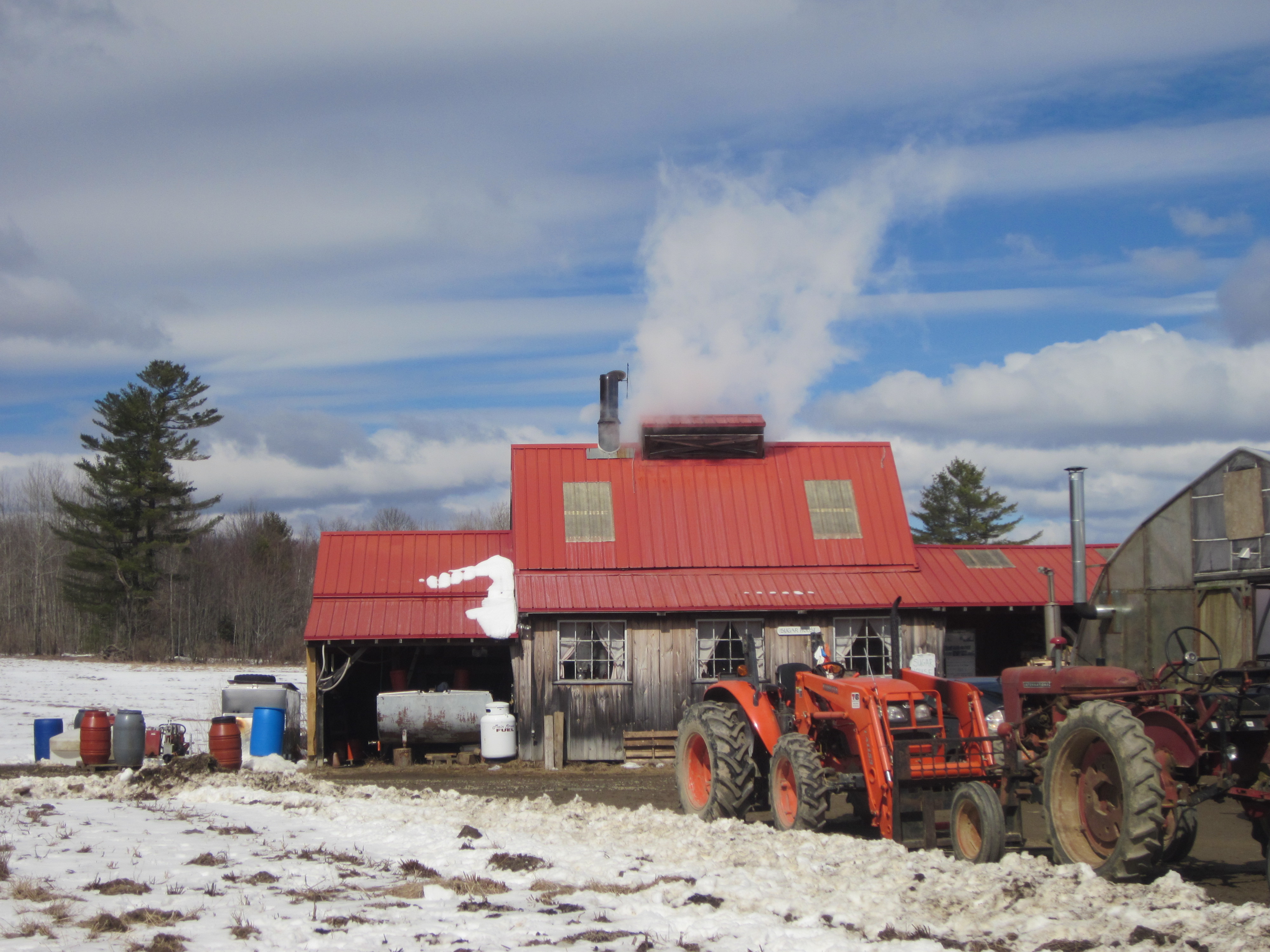 It's maple sugaring season! This quintessential New England flavor is enjoyed all year, but it must be made in the fading days of winter when the sap is rising in the trees but they can still freeze at night.
 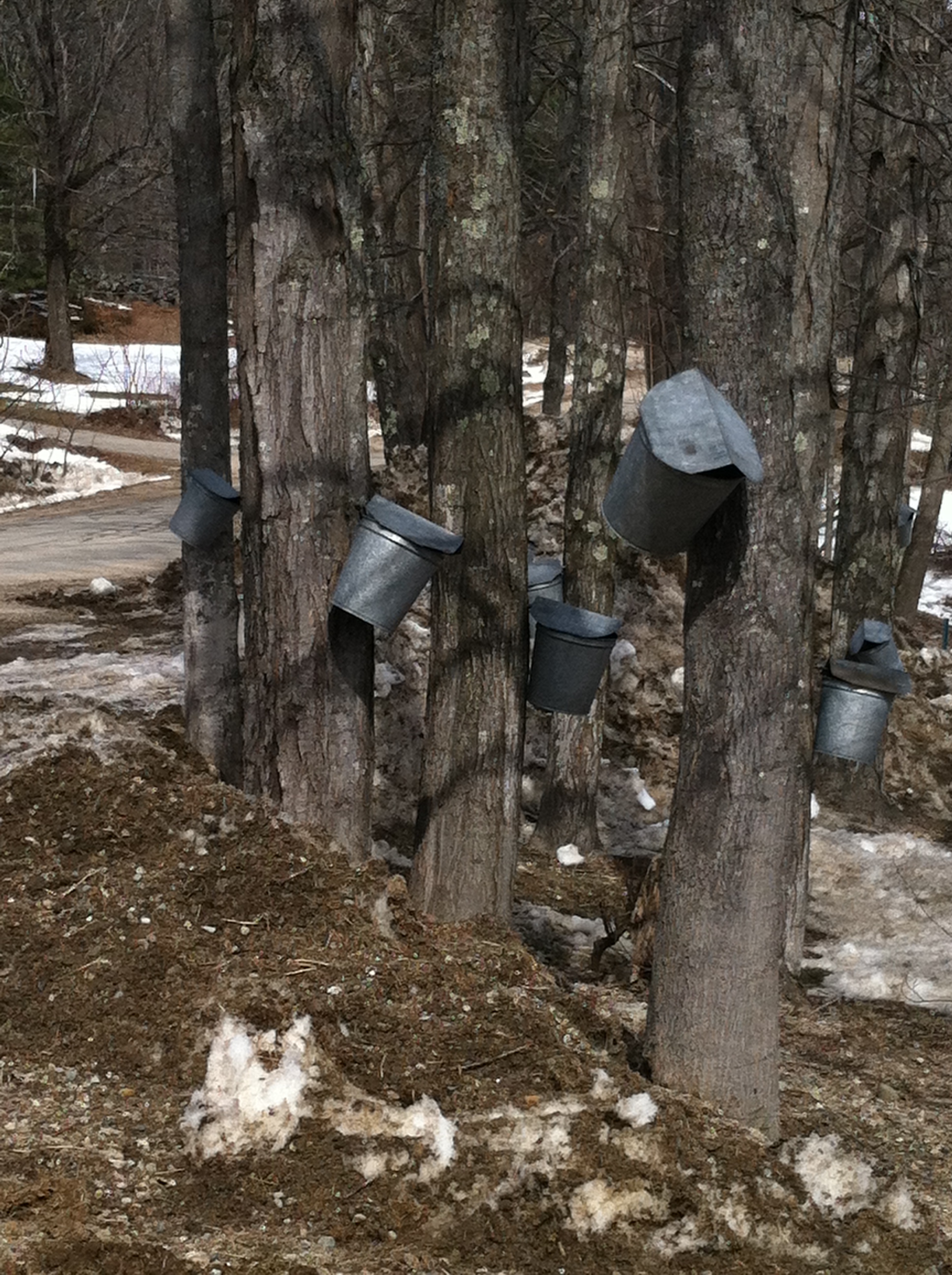 Maple syrup comes from the sap of sugar maples, black maples, and red maples. At this time of year you can see plastic or metal buckets equipped with roofs hanging from maple trees all over New England. A gallon of syrup requires on average about 40 gallons of sap, and each tap produces 10 to 20 gallons of sap, so the buckets must be emptied frequently over the course of the season, which lasts about 6 weeks.
 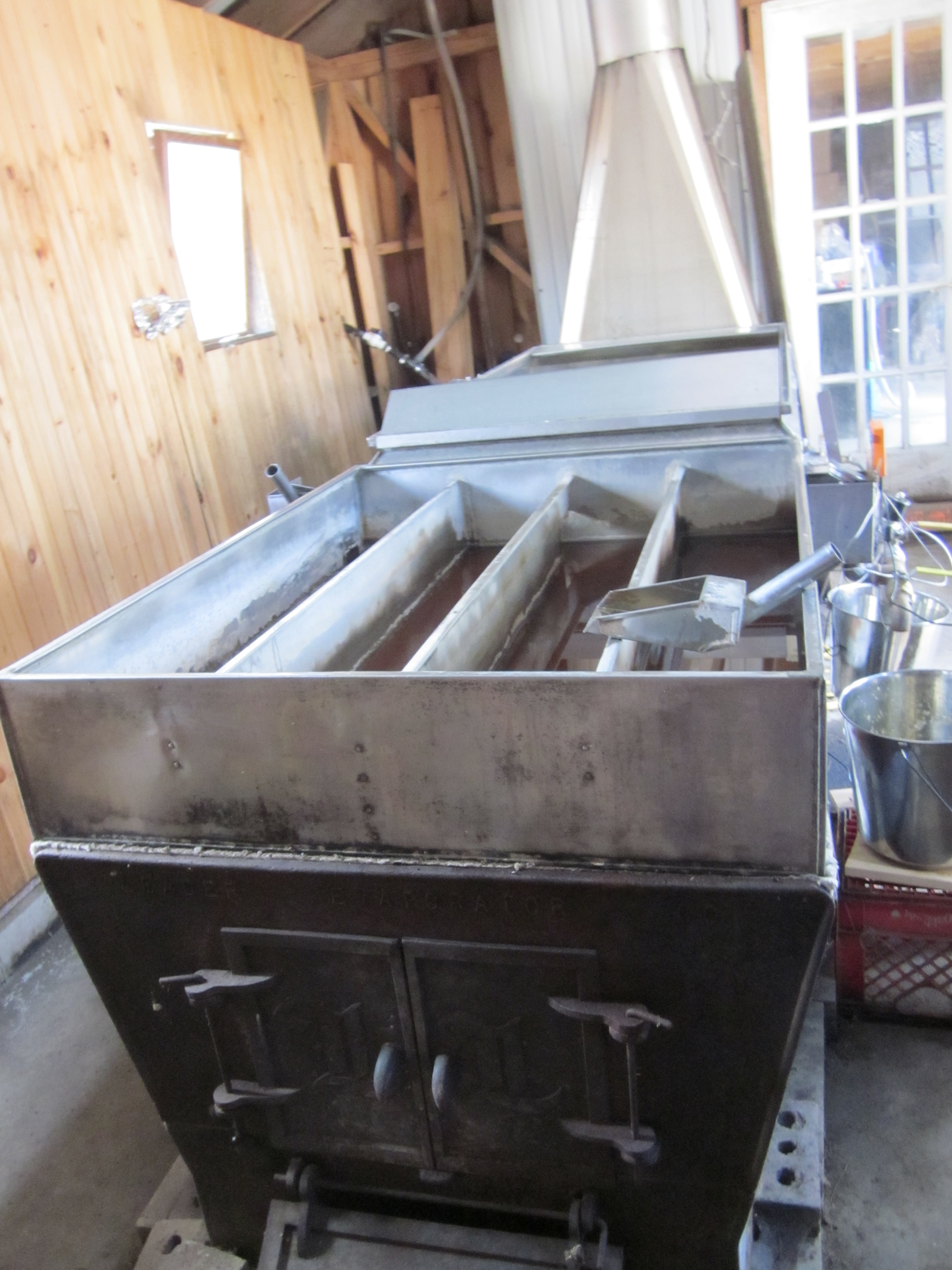 The collected sap is boiled down in an evaporator. The evaporator shown here is a Leader wood-fired evaporator at
 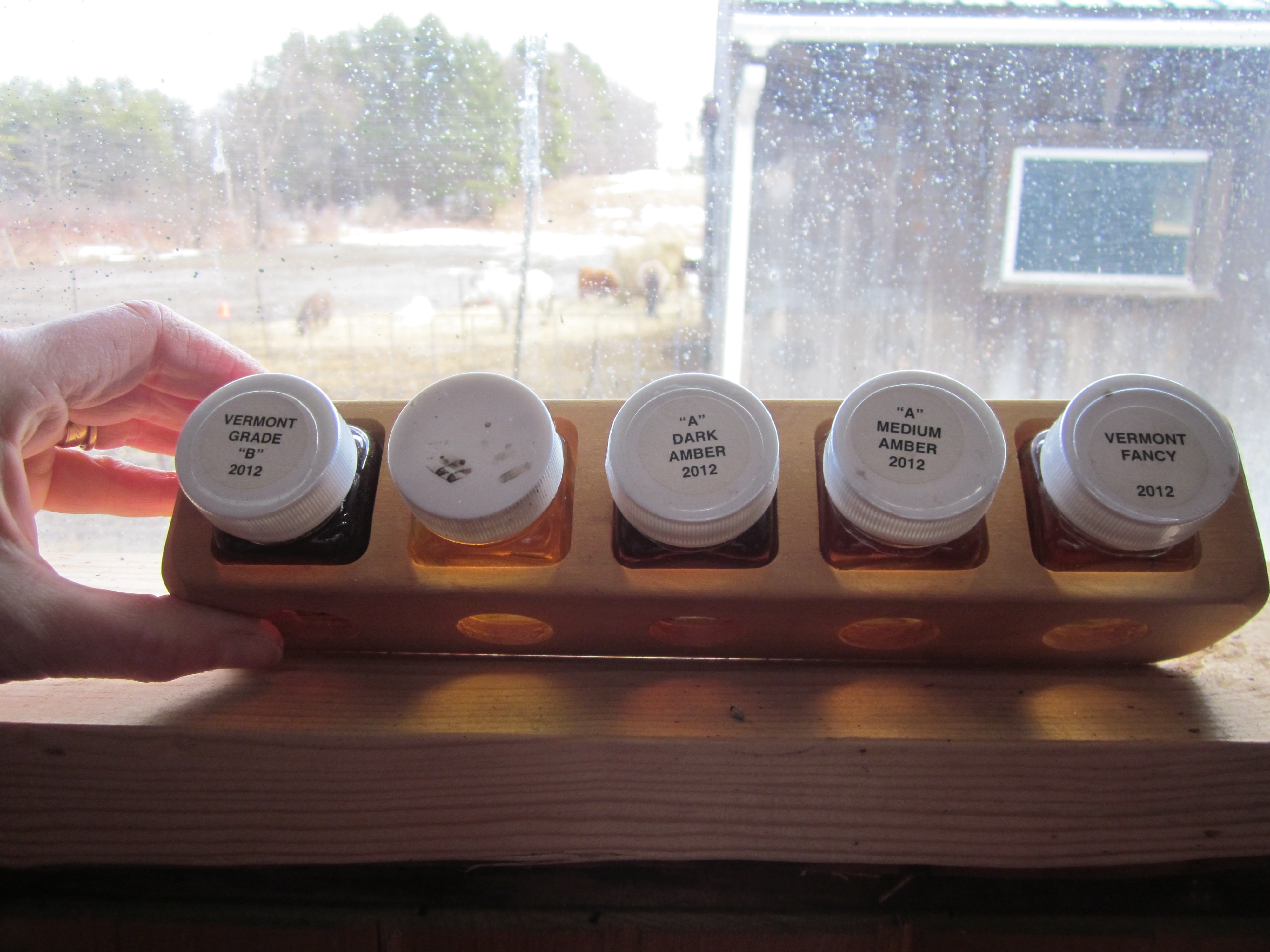 When the boiled syrup reaches the proper sugar concentration (66 Brix), it is filtered. The gritty filtrate is called sugar sand. Nobody I talked to could think of any use for the stuff.
 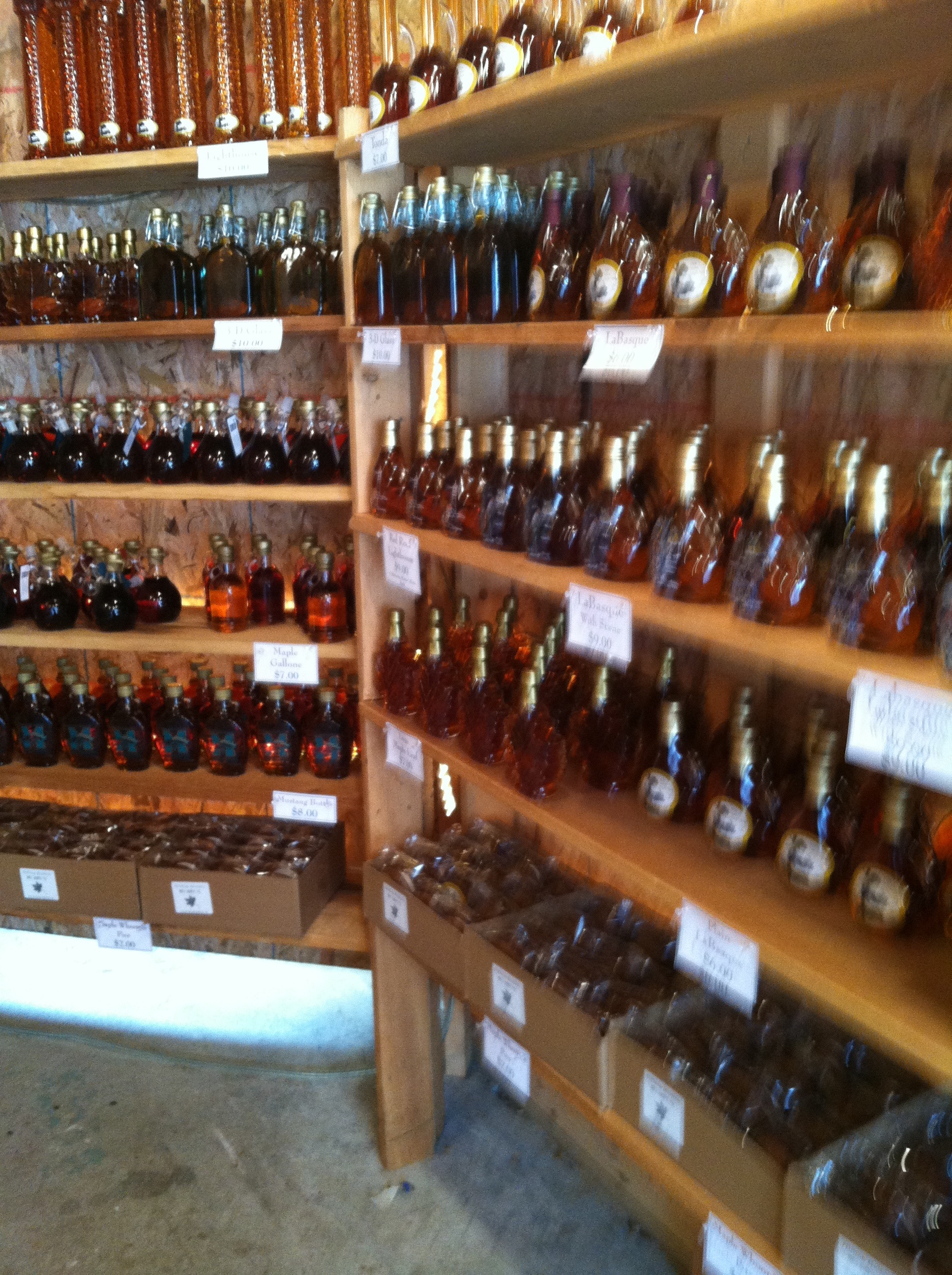 The bottles are labeled and sold.
  Canada produces about 80% of the world's maple syrup, and most of the rest comes from New England and New York. Of that amount, Vermont makes almost half, NY a quarter, Maine an eighth, and MA, NH, and CT make up the rest.
 Vermont syrup has a very slightly higher sugar concentration (66.9 Brix, about 1%) and the grades are different. Vermont grades are Grade A Fancy, Medium, and Dark Amber, Grade B, and then Commercial. So you can buy retail Grade B Vermont syrup but it's not the same as Maine's Grade B. Vermont Grade B is Maine Extra Dark.