SearchUser loginNavigation |
Old Tom GinType of Post:
What's on my Mind?
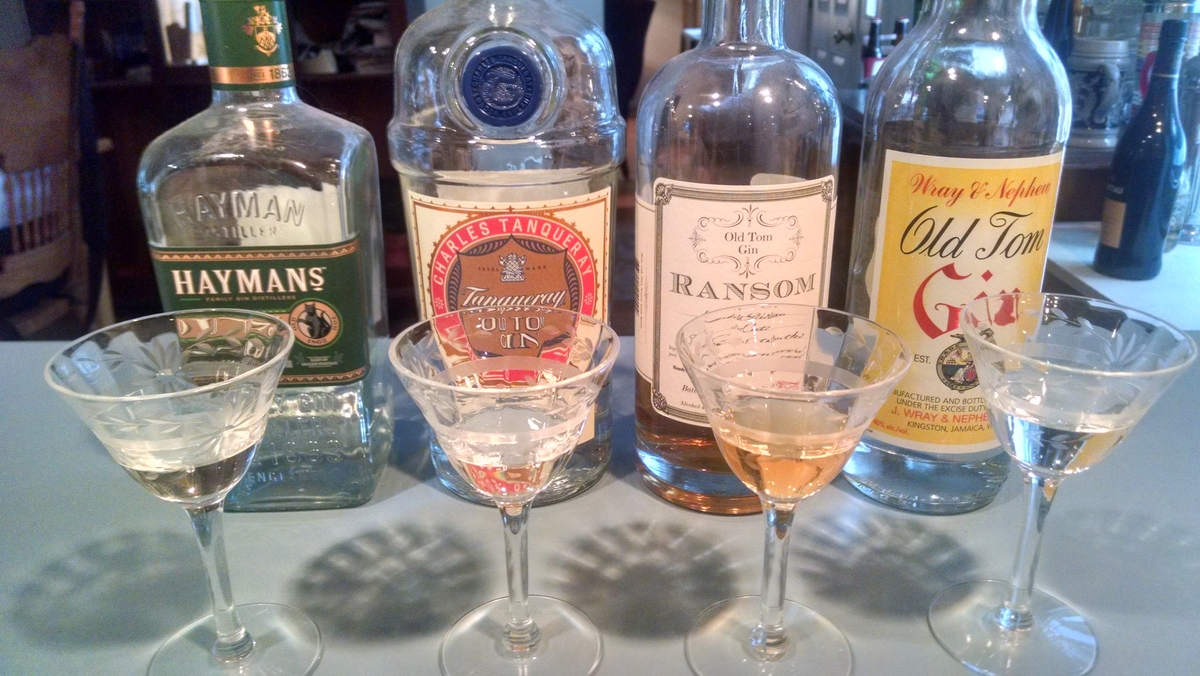 Old Tom Gin is a creature of history and mystery now facing a possible resurgence in popularity thanks to the craft cocktail movement. This article will examine some of the available information in the hope of identifying just what Old Tom Gin is for the serious cocktailian. Then it will examine some half-dozen Old Tom Gins that I have tried, in light of our discoveries and deductions. I encourage you to Google "Old Tom Gin" and to research the little bit about it on Wikipedia. That article has a lot of problems! Be equal parts skeptical and curious. You will find some inconsistencies, and many claims founded only on third-hand tradition or marketing blurbs. In broad strokes, the history of gin goes like this:
I'll stop the history here, with a mass market for consistent quality gin. Now let's look at some of the current information available about Old Tom Gin, then we'll go back and match up those claims to the known history. It is important to note that most of the information available comes from gin distillers, cocktail writers (who may have some disclosed or undisclosed relationship to a distiller), and from books written in recent years, informed by the interests of the classic cocktail renaissance. Much of this information has a commerical agenda behind it, or was written without a concern for accurate history. My hypothesis is simply that the emergence of London Dry Gin in 1769 and then its surging popularity in succeeding decades saw many other local gins losing market share and vanishing from the market. Some of these were lamented by fans who could no longer get them. I suspect that Old Tom Gin became the common term for what people remembered as old-style gin. In some places, the lamented gin was a sweetened variety, in others it had one or another interesting "botanicals" (turpentine?), or a higher (or lower) proof, or barrel-aging, or any number of other characteristics. "Common knowledge" about Old Tom Gin:
I think it's most accurate to say that gin passed through a chaotic "anything goes" period until market forces and the Crown's desire for control forced a shakeout that ended many local brands of Old Tom and other gins. Old Tom had no single formula, no single identity except what was decided upon by each distiller that produced an Old Tom Gin to their own recipes. Today, as then, some distillers are producing Old Tom Gins, based on actual or fanciful old family recipes. They're not wrong to call theirs an Old Tom style gin, but it would be wrong for any one distiller to claim the authentic recipe for Old Tom Gin. So if you want to try your hand at some cocktails using Old Tom Gin, you have some research to do. I think it's a sure bet that we won't see the turpentine-flavored varieties on the bar at your favorite hipster gin mill, but the currently available versions have significant differences. Try a few, and if you don't like one, don't think you have tried Old Tom Gin! Try another. They're all different, and that much is historically accurate.
|
Explore Our ContentThe Foodie Pilgrim is also active on: Newest Recipes
|