SearchUser loginNavigation |
Bronx Cocktail
I enjoy the Bronx Cocktail in the summer, or anytime during a Yankees game! Because of the sweet vermouth and the orange juice, this works well with a wide variety of gins, including some of the more daring new American gins.
Mojito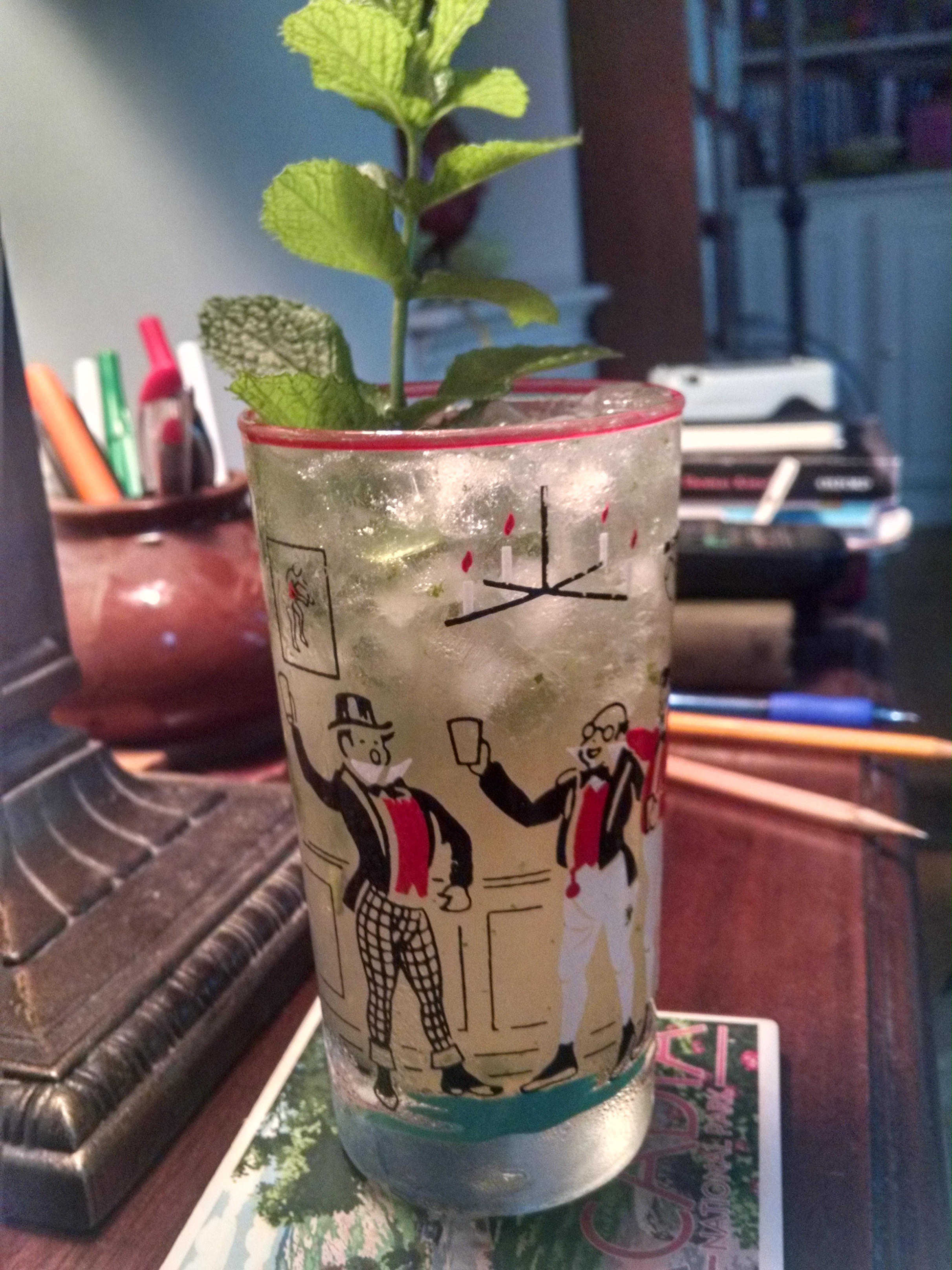 This is a very old drink that has gained new celebrity. The inspired combination of white rum (or aguardiente), lime, mint, and sugar has been traced to a 16th century drink borrowed from indigenous Cubans. At that time it was intended to cure scurvy and dysentery. Today it is made with finer versions of the same refreshing combination of ingredients, and its uses are more recreational than medicinal!
Dining in IrelandType of Post:
Beyond New England
 Lorna and I spent 15 days in Ireland, dining out every night. We learned a few things that you might want to know if you are planning a vacation to Ireland. To dispense with old stereotypes, there is plenty of good food in Ireland, including many excellent preparations of traditional old dishes. We never did see corned beef and cabbage on the menu, or any corned beef at all, for that matter. There is mediocre food to be found, of course, but if you plan ahead, you can do very well indeed.  Guinness is everywhere, of course, and they have a new hoppy lager offering called Hop House 13. It is not clearly marked on the tap handles as a Guinness product, so you may think that you are giving support to the local craft beer scene when you're actually supporting their common rival! Beyond that, though, there is a thriving craft beer culture. In every part of Ireland we found local offerings. The Irish craft beer scene is not as established as the US craft beer scene, and it has to work extra hard against that constant Guinness headwind, but with some research you can find some exciting new Irish brews. Perhaps if American tourists get into the habit of asking for something other than Guinness, some restaurants and pubs will open new taps for the local products. Driving in IrelandType of Post:
Beyond New England
 Regular readers know that we drive quite a lot. Our favorite Saturdays are spent in the car, exploring scenic locales and discovering foodie goodness. In June of 2016, we took a long-anticipated vacation in Ireland. Naturally we spent most of it driving through some of the most sublime scenery we had ever explored. Of course we also found lots of foodie goodness, which is documented elsewhere in this blog. This post is for those who are considering a vacation that involves driving in Ireland.  The first thing to know is that it's expensive to drive in Ireland. Gas is expensive, of course, as it is in most of Europe. But the car rental is pricey, too. We rented from Avis at Dublin airport, and were disappointed to learn that they do not honor the CDW (collision damage waiver) insurance that many credit cards provide automatically when you use them to rent a car. The CDW cost nearly as much as the car rental, and it has a thousand-Euro deductible! They also had a super-CDW with no deductible. Irish Pancakes Irish pancakes are not like American pancakes. They are thinner, closer to a crepe than to a big fluffy American pancake, with no baking powder. They are typically served with honey or jam, or brushed with lemon juice and dusted with sugar. Pancakes figure prominently in the Irish celebration of Shrove Tuesday, or Mardi Gras, which they also call Pancake Tuesday. This is the day to use up all the eggs and fat in the house to prepare for the Lenten fast. My mother's side of our family still makes pancakes on Shrove Tuesday! Lemon-Butter Cod This was one of those inventions born of necessity. Lorna had bought a lovely piece of cod, but I did not have the ingredients for my usual preparation. I remembered a wonderful light fish dish that I had had in Xrisohorafa, a lakeside village in remote northern Greece on a similarly hot night many years ago, a simple preparation of fish with olive oil and lemon juice, with some parsley and sea salt. I had some butter on the table so I used that instead of olive oil; it was a fortuitous substitution.
Coffee in IrelandType of Post:
Beyond New England
We explored the countryside and also the biggest cities, Dublin and Belfast, and of course I was on the lookout for good coffee. Here's what I discovered: Svíčková na smetaně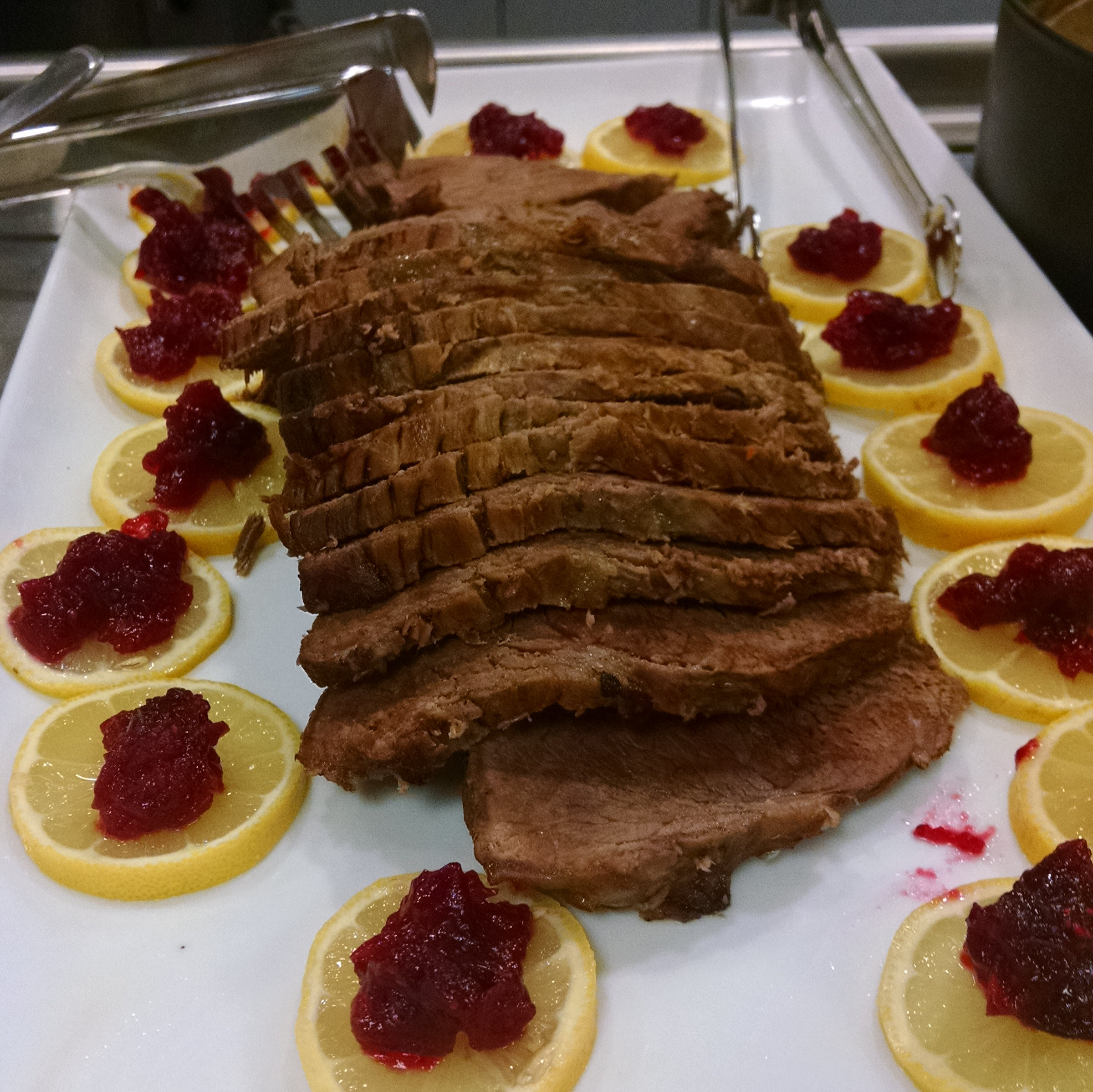 Svíčková na smetaně (hereafter simply svickova) is classic Czech home cooking, but it is often made for fine dining events as well. It's a braised sirloin of beef with a sauce of pureed vegetables and cream, traditionally served with fluffy knedlicky (bread dumplings sliced with a thread). I made this with my Czech friend Jana in November of 2015, when the coming winter mader her think of her father's Svickova back home in Prague!
A Swedish FeastWe had a Swedish feast. I don't remember why...I guess it seemed like a good idea at the time. We had no lutfisk, but I had acquired some Swedish potato sausage and the rest became self-evident. 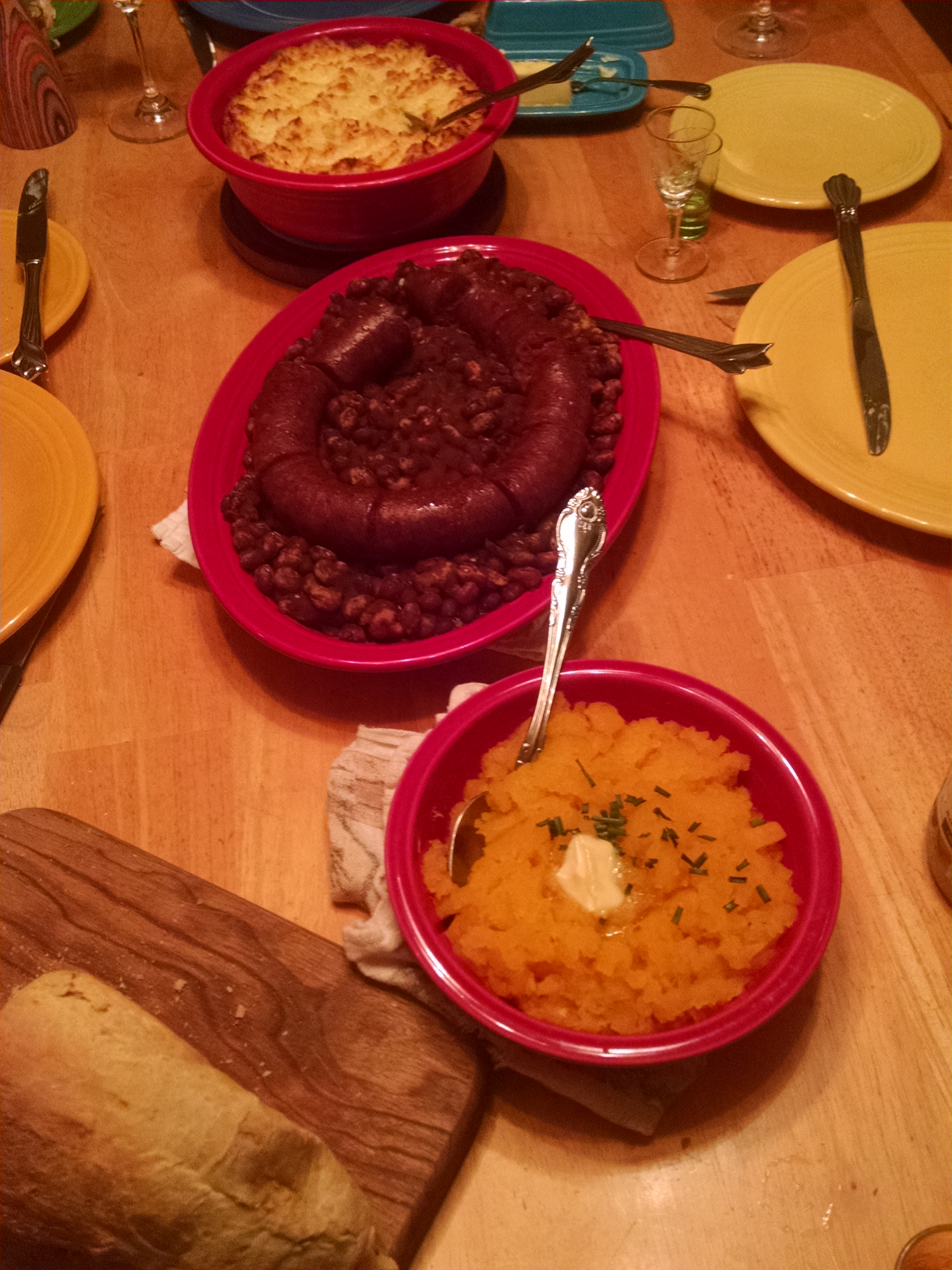 We had: Oyster Stew
Here's a Yankee classic, submitted by long-time reader Sue Sullivan.
Fresh Pasta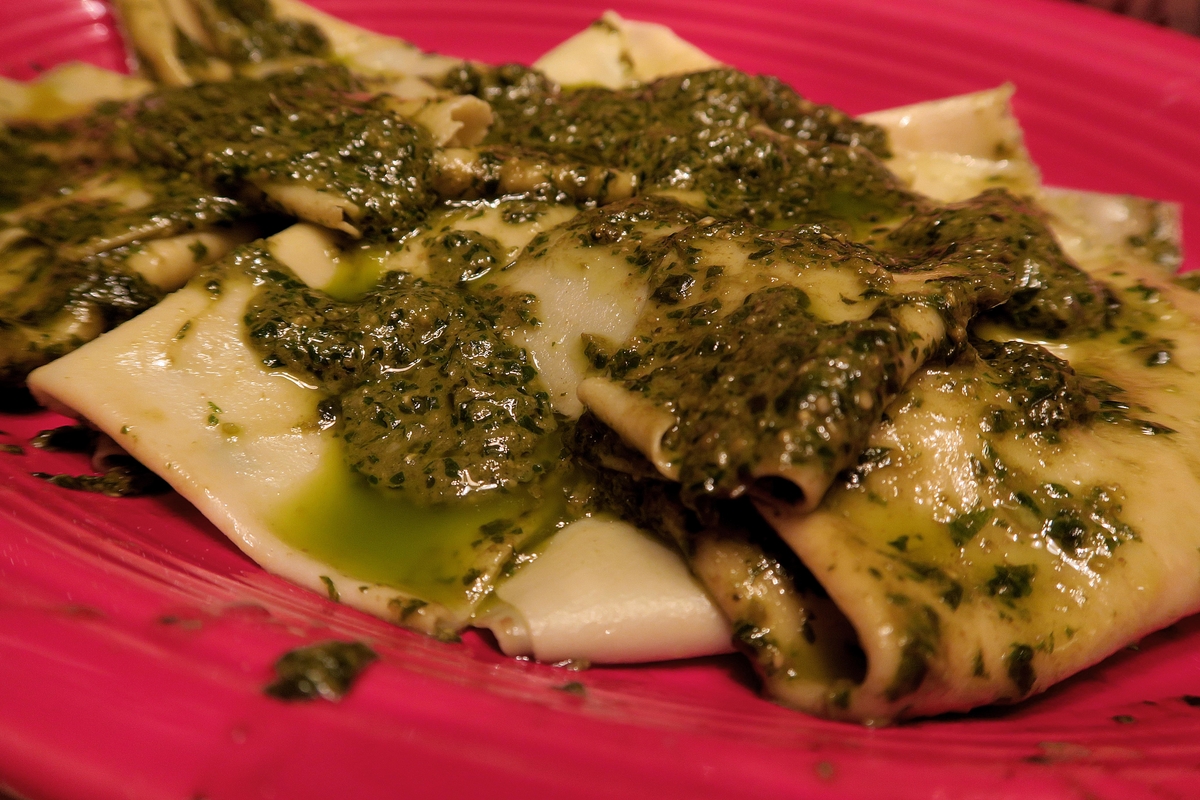 What a treat is fresh pasta! When we toured Italy in July 2015, our most memorable meal was a plate of fresh ravioli in Rome. The story is rather longer than this page requires, but the bottom-line result was that fresh home-made pasta is work exploring, so I did. In this case, it was for Annette's Genoese Birthday, so I made silky-smooth, super-thin Genoese Mandilli de Saea (Silk Handkerchiefs) with fresh pesto. It was fun and delicious! Savoy Cake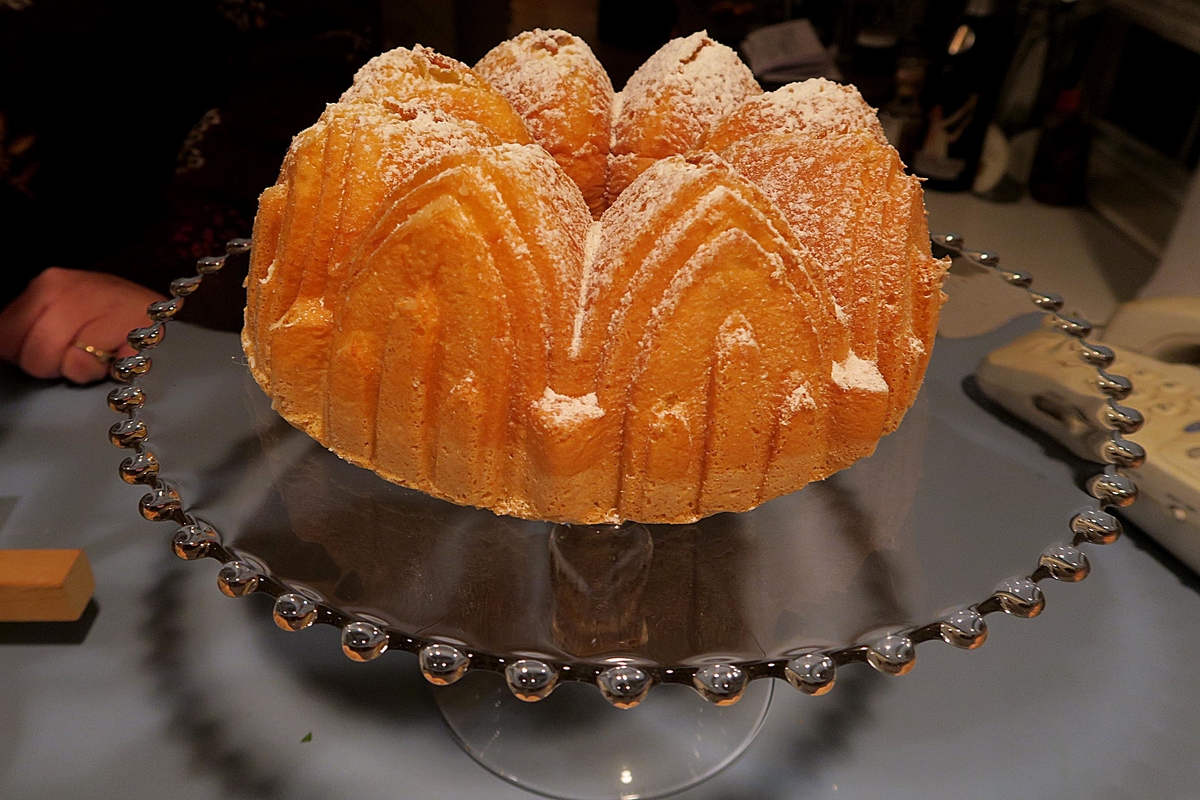 This beautiful, light sponge cake works well in a fancy mold, and it accompanies berries, preserves, or chocolate sauce wonderfully. Unlike the similar Genoise Butter Cake, this one uses no butter. This beautiful, light sponge cake works well in a fancy mold, and it accompanies berries, preserves, or chocolate sauce wonderfully. Unlike the similar Genoise Butter Cake, this one uses no butter. BondirType of Post:
What's on my Mind?
 There is something to be said for a restaurant where you order your favorite dish every time you go, and it always tastes the same. It’s as comforting as the pillow upon which you lay your head, but Bondir isn’t that sort of place. Oh it’s comfortable enough, and the staff is welcoming, and there are no snooty waiters peering down their noses to see which fork you choose. We entered the premises at 279A Broadway in Cambridge on a chilly evening and were offered a seat by a warming fire. We sipped Spanish cava and enjoyed the homelike atmosphere. But as soon as they brought the bread basket, what we thought of as reality began to twist and bend. There was “sea bread” in which black squid ink ranged across the slice like the negative of a photo of the Milky Way. The bread also contained shrimp and seaweed. I think the shrimp may have been dried and ground to a powder. The bread had the heartiness of wheat and a briny flavor that reminds you of the scent of the ocean when you walk in the froth of waves in the cool of a summer sunrise. I ate it in fascination tinged with disbelief. New England RumType of Post:
What's in my Glass?
Destination:
New England
Best of Show:
Medford Rum from GrandTen Distilling 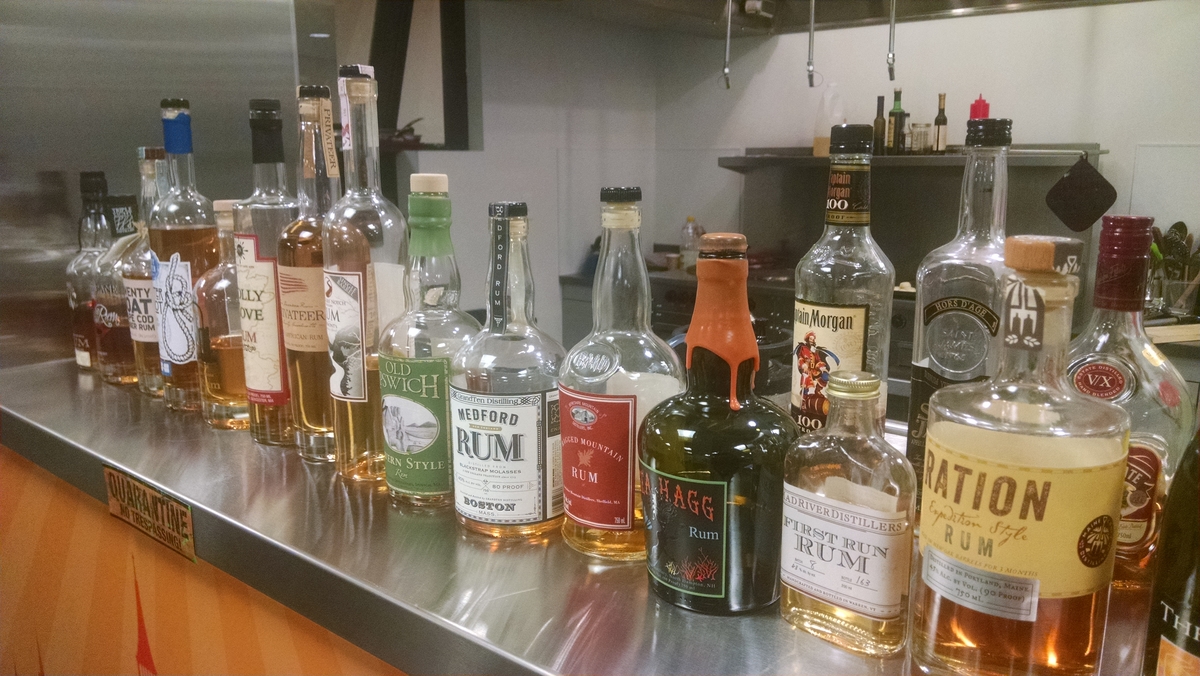 New England has a long relationship with rum, dating back to colonial times. Rum was invented in the Caribbean in the 17th century, and in the years just before the Revolution, over a hundred and fifty distilleries were making rum throughout New England, mostly wherever molasses was imported. In those days, American colonists drank more than 5 gallons of rum per capita annually.  Today I count 23 distilleries actively making rum in New England, with a handful of them that have not yet aged enough product to release an amber rum. This article is an exploration of what is known about colonial rum and rum made today to see if we can identify the characteristics of a New England Rum. I'll start with a brief discussion of the steps in producing a rum, and then I will highlight four areas where New England's climate and economy would contribute to making a distinctive style that can be called New England Rum. This article is not an attempt to identify what Paul Revere drank in his Hot Buttered Rum or his Hot Flip on a cold Boston night; then as now the great majority of rum was distilled, bought, and consumed for the simple and ancient purpose of inebriation, with no thought to "crafting a fine artisanal spirit". Nonetheless competition was fierce and each distiller had to maintain a reputation, if not for thrift then for quality. Finnan Haddie
Finnan haddie is smoked haddock. You can sometimes find it frozen at your fishmonger. That's OK - Finnan haddie is said to have been invented by a penurious Scot who wanted to salvage a load of haddock damaged by smoke in a warehouse fire. Rather than let it be discarded, he claimed it was the Irish ("Fennian" or "Finnan") style and sold it for food. So this recipe was never developed to use the purest, freshest, local ingredients - it came from a salvage operation! Finnan Haddie can be a tricky dish. In general, people that like it like it the way they like it (follow that?) and any deviation is simply wrong. For example, one of our favorite restaurants used to make it one way, and Lorna loved it. Then the new chef changed the recipe and she won't eat it any more. It wasn't a big change - he didn't add pickles or substitute mussels for haddock - he just makes it thinner. So this recipe is for a thicker version. It's easy to thin it by adding milk or cream, but it's a little more work to thicken it up again.
Braised Green Cabbage
It's a savory dish, good with homey fare like meatloaf or hamburgers. The flavors mingle over two hours of slow cooking to become something unexpected and delicious. I did this in a heavy Le Creuset braising pan. If you do not have one of those expensive kitchen luxuries, don't worry! You can do this just as well in a glass or enameled baking dish covered tightly with aluminum foil; the secret is to confine all the flavors in a small volume with enough area to spread out.
Blueberry Slump This easy crowd-pleaser is known variously across New England as Blueberry Buckle, Blueberry Cobbler, Blueberry Slump, and Blueberry Grunt. The basic idea is simple: a bed of berries topped with sweet biscuit dough and baked until the berries burst into a delicious sauce for the tender biscuits. This is great hot with ice cream, or cool with whipped cream. Make it with wild Maine Blueberries if you can, especially while they are in season in August. Blueberry slump is very easy to make; this one was made at work in the Actifio Food Truck by my friends Debbie Goswami and Chandrika Venkatraman.
Strawberry Pie
It's easy, and it's a good choice when strawberries go on sale at the supermarket because you have to use them fast before they spoil. This one was made by my friends Debbie and Sonali at work. We used a frozen pie crust because rolling out a homemade pie crust is not very difficult, but it is a good way to get your work clothes dusted with flour!
Italian Meal 2: Lake Garda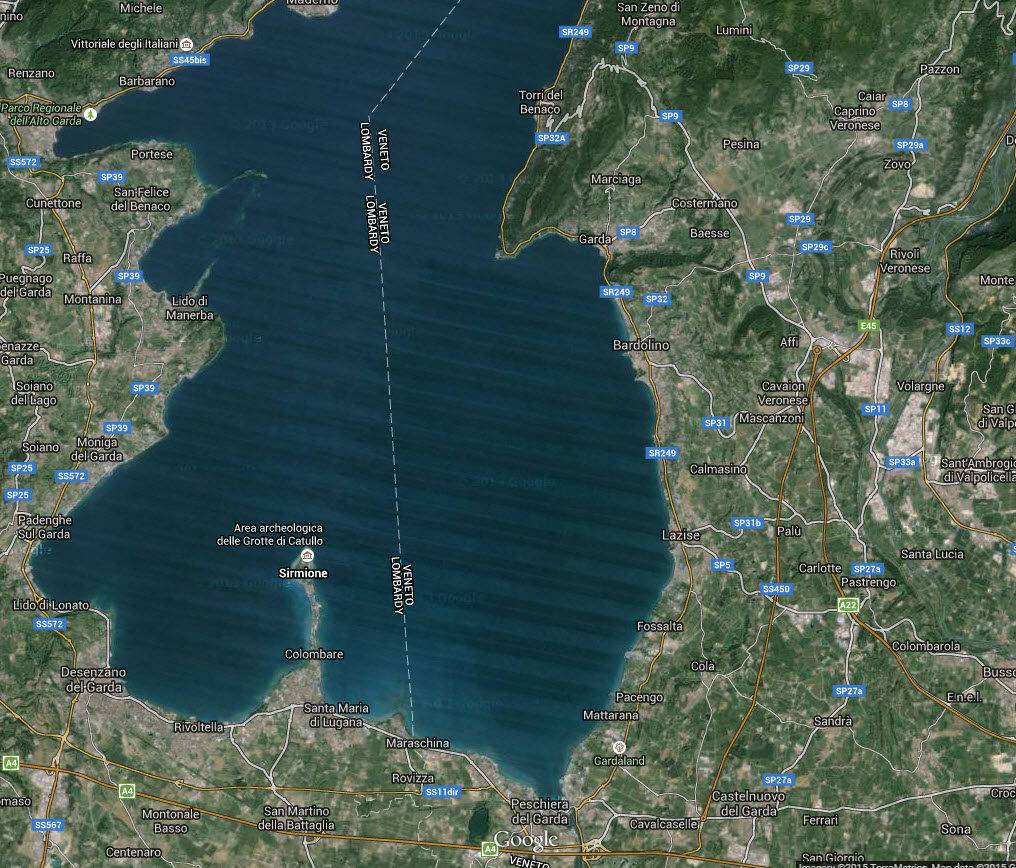 The second discovery meal of the trip was in Sirmione, a beautiful resort town on a skinny peninsula that juts northward in gorgeous Lake Garda somewhat like Nantasket juts into Massachusetts Bay. We had not planned to visit Sirmione, although a drive to Lake Garda was one of the optional drives we had hoped for. But we slept late after the opera and the preceding night's late dinner, so a long drive in the mountains and lake would have taken too much time from Venice.  Sirmione is a resort town, with basically one road in and out, little parking, fine hotels, beautiful beaches and a castle at the end of the peninsula. The northern half of the lake is surrounded by great mountains, and the eastern shore is covered with vineyards growing grapes for Valpolicella, Bardolino, and Amarone wines. It reminded us of a cross between Provincetown and Santa Cruz, with the wine country and a castle thrown in for good measure. In Cod We Trust, by Cape Ann food columnist Heather Atwood, is both a comprehensive practical record of Massachusetts coastal cuisine and an affectionate, humorous, thoroughly enjoyable coastwise journey from the Rhode Island border to the border of New Hampshire. Atwood maintains the Food for Thought foodie blog, and does much more than that online, in print, and on video. Here's a bit that I stole from her website; I'll add more about the book below the quote:
Heather Atwood is author of the blog "Food for Thought" and the weekly column by the same name syndicated in a number of Massachusetts newspapers. For the online cooking site Cook123 Ms. Atwood hosts cooking videos featuring regional Massachusetts chefs and cooks. This combined work has created a web of connections in the New England food community, allowing Atwood a prized familiarity with Finns in W. Barnstable who still make fruit soup, the Gloucester Sicilians who bake their own zeppole, and day boat fishermen who sell pearly scallops from coolers out of the back of their cars. She reveres the people who preserve and energize the New England food landscape.
Her cookbook, "In Cod We Trust, the Celebrated Cuisine of Coastal Massachusetts," explores the cultures that have made this ragged coastline home, and the meals they prepare.
Back to my review: In Cod We Trust is a beautiful and useful book. It's set up geographically, from south to north along commonly known areas: South Coast, Cape Cod, each of the islands, South Shore in two parts, etc. Each section opens with a full-page photo and a couple of pages about the region's unique foodways, then a mini-table of contents to the recipes in that section. I've bookmarked those. Italian Meal 1: Emilia-Romagna This was our first locavore meal in Italy. It was at the Hotel Sole in the town of Busseto, in the province of Parma, in Emilia-Romagna in north-central Italy's agricultural heartland. Busseto was the hometown of my favorite composer, Giuseppe Verdi. 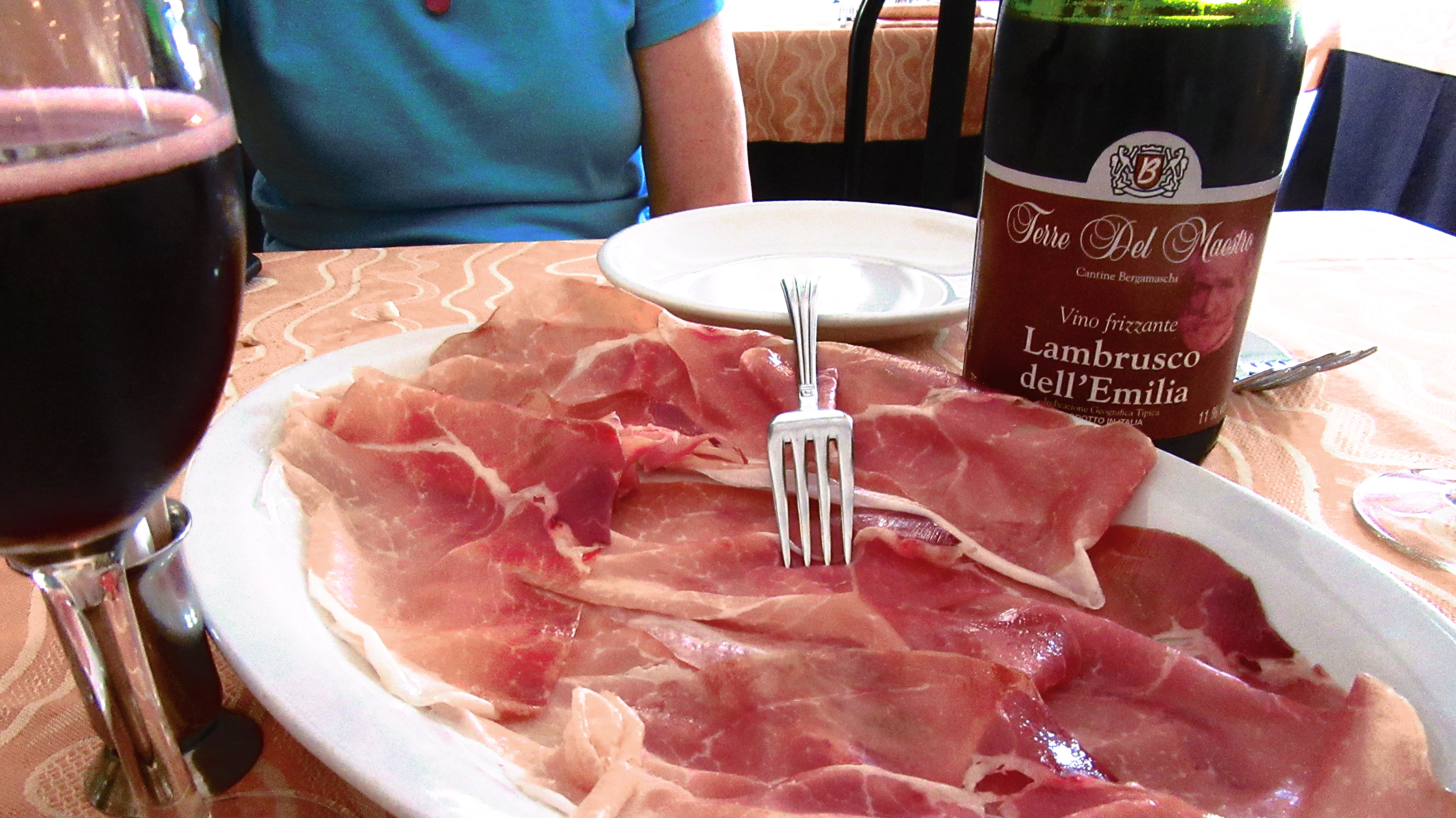 Emilia-Romagna is dominated by the rich agricultural flatlands around the Po river valley. The climate is mild and the growing season is long. This long-settled region is home to a lot of familiar foods that we see in supermarkets all the time: prosciutto and Balsamic vinegar, Reggiano-Parmigiano and Grana Padano cheeses, Lambrusco wine, and many pastas. Strawberry Bavarian Cream
There's not much to this, so the focus must be on the berries and cream. The flavor can really sparkle with fresh local berries, but more than that is the problem of watery berries. A pint of those enormous supermarket strawberries has less flavor than six or ten natural berries, the flavor is simpler, and the berries are full of water too. This simple dish responds well to a variety of garnishes, from chocolate sauce to mint leaves to sour cream and even balsamic vinegar.
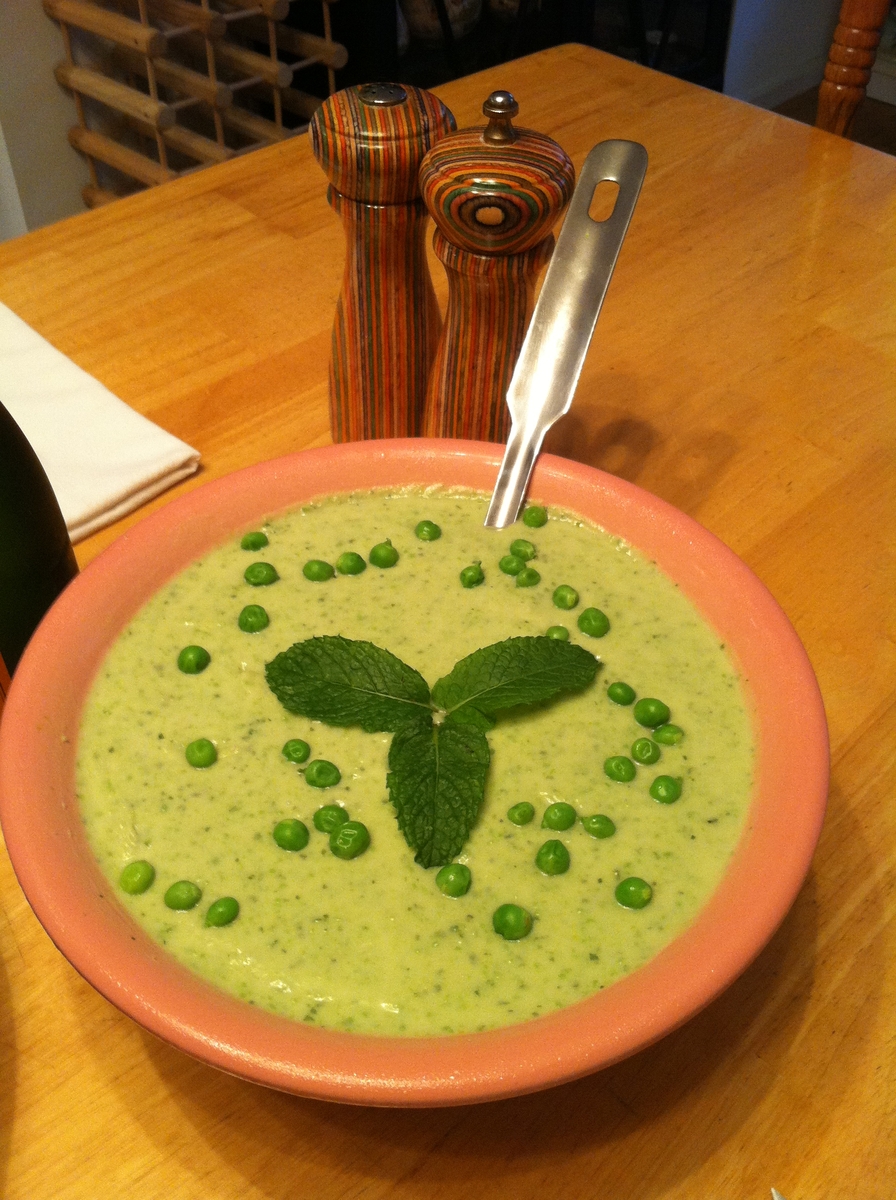
Yankee Fish Dinner for June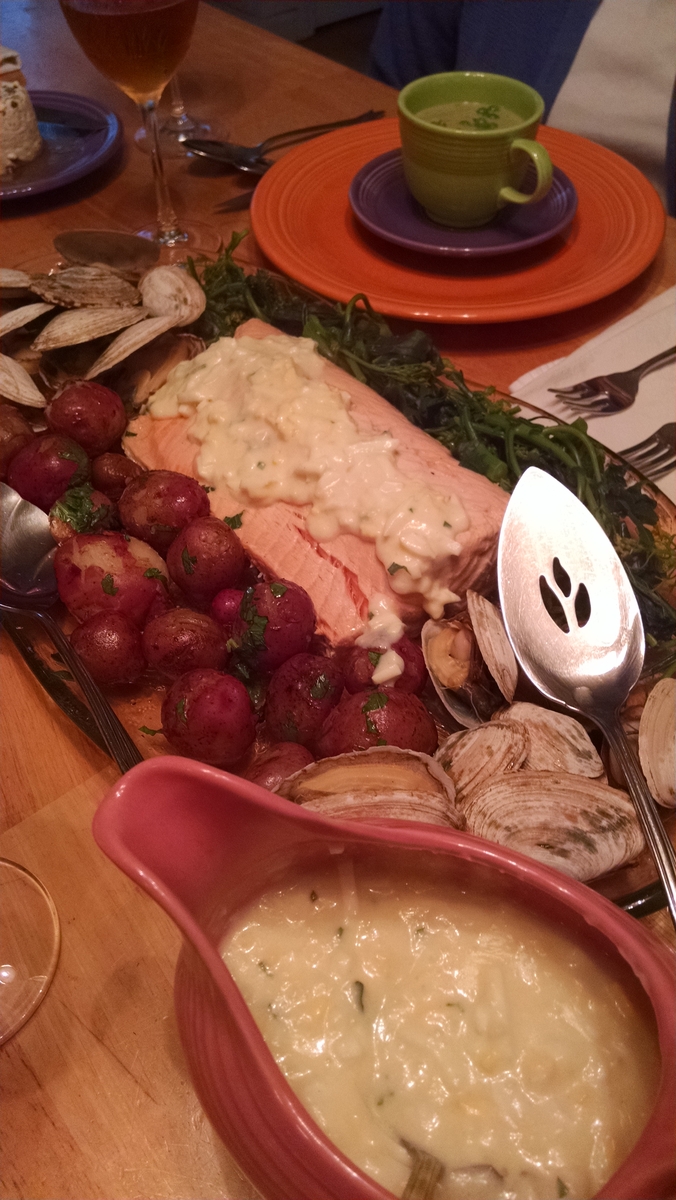 It was a June Sunday and I had some nice produce from farmstands in Maine, so I made this nice old-fashioned Sunday dinner with all local and seasonal ingredients. It was a June Sunday and I had some nice produce from farmstands in Maine, so I made this nice old-fashioned Sunday dinner with all local and seasonal ingredients.The haul included three pounds of fresh peas in the pod, a pound of new red potatoes, broccoli raab, strawberries, and a pint of super-fresh local heavy cream. That would surely inspire any cook! We opened with the delightful Chilled Mint & Pea Soup. That recipe has French roots, but so did some of our colonist forebears and everything in it was local to New England and it's great for June when the peas are just ripe, so I included it. We had: Chilled Mint & Pea Soup
This can be made a few days ahead. Like many soups, it improves with a day of rest so the flavors come together.
Mirepoix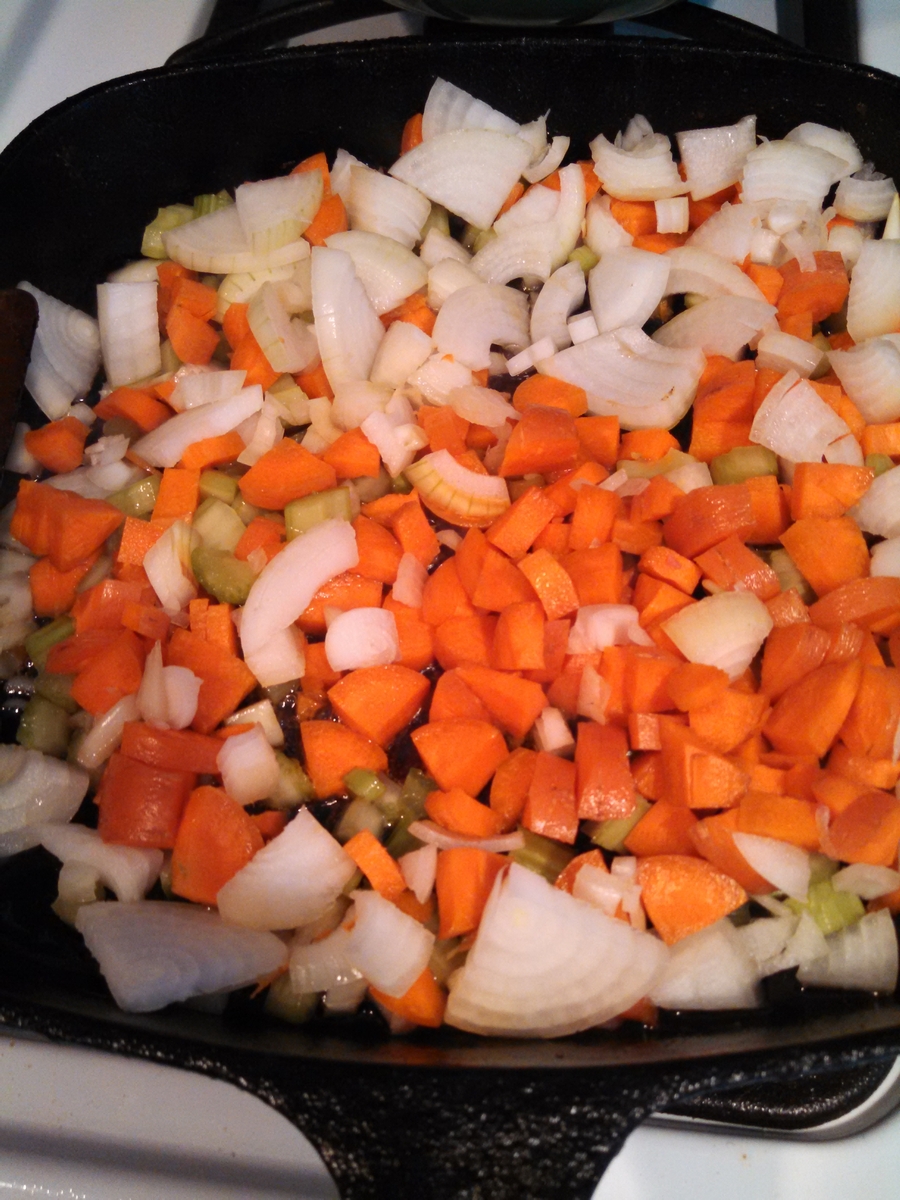 The mirepoix is a fancy French name for the aromatic vegetables at the base of a great many sauces and braises. It's simply 2 parts by weight of onion to one part each of carrots and celery. You use a mirepoix when making any brown sauce (Escoffier's Sauce a l'Espagnole and its many fine children), many red sauces, and most white meat demiglazes. You also use it when braising meat, as in a Pot Roast, and in many stews.

|
The Foodie Pilgrim is also active on: Newest Recipes
|
 This is a Perfect Martini (that is, equal parts sweet vermouth and dry vermouth instead of all dry vermouth) with orange juice for sweetness and complexity.
 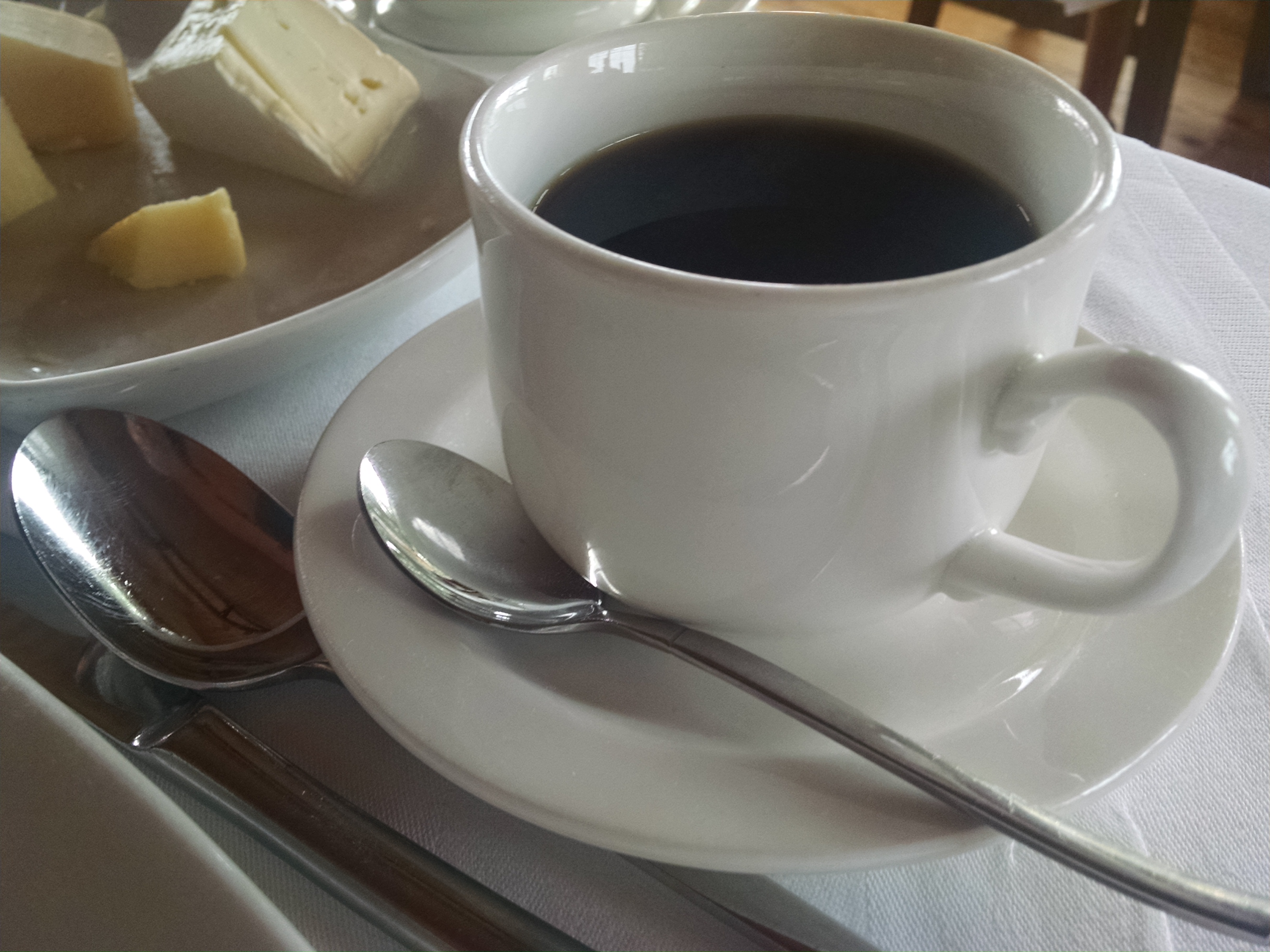 Travelers from New England soon learn that Ireland has a very different coffee culture. While Americans consume on average .931 cups of coffee per day, the Irish consume only .215, or less than one quarter of the coffee their American counterparts consume.
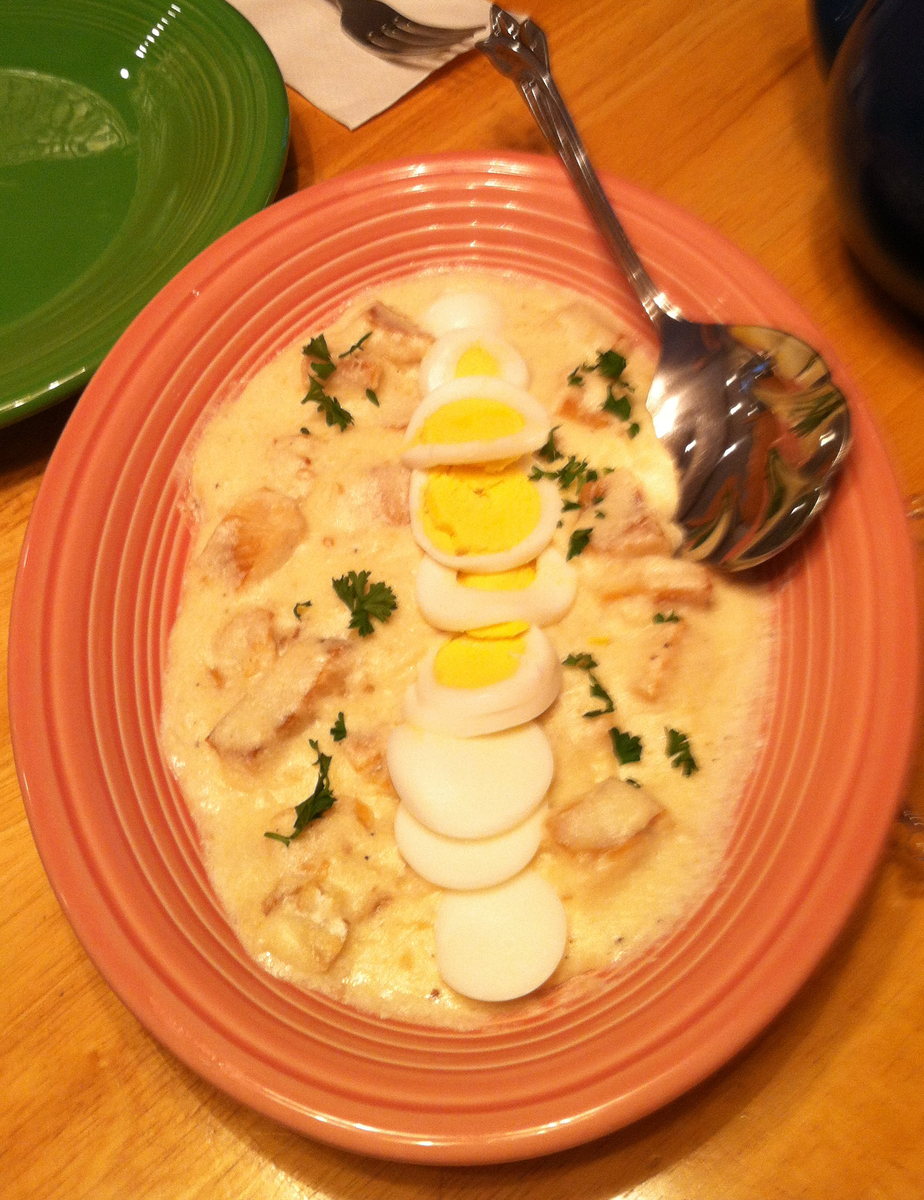 One of our favorite breakfast or lunch dishes on a cold rainy day is this old Scottish favorite made from smoked haddock in a white sauce, with the white sauce made from milk in which the fish was cooked.
 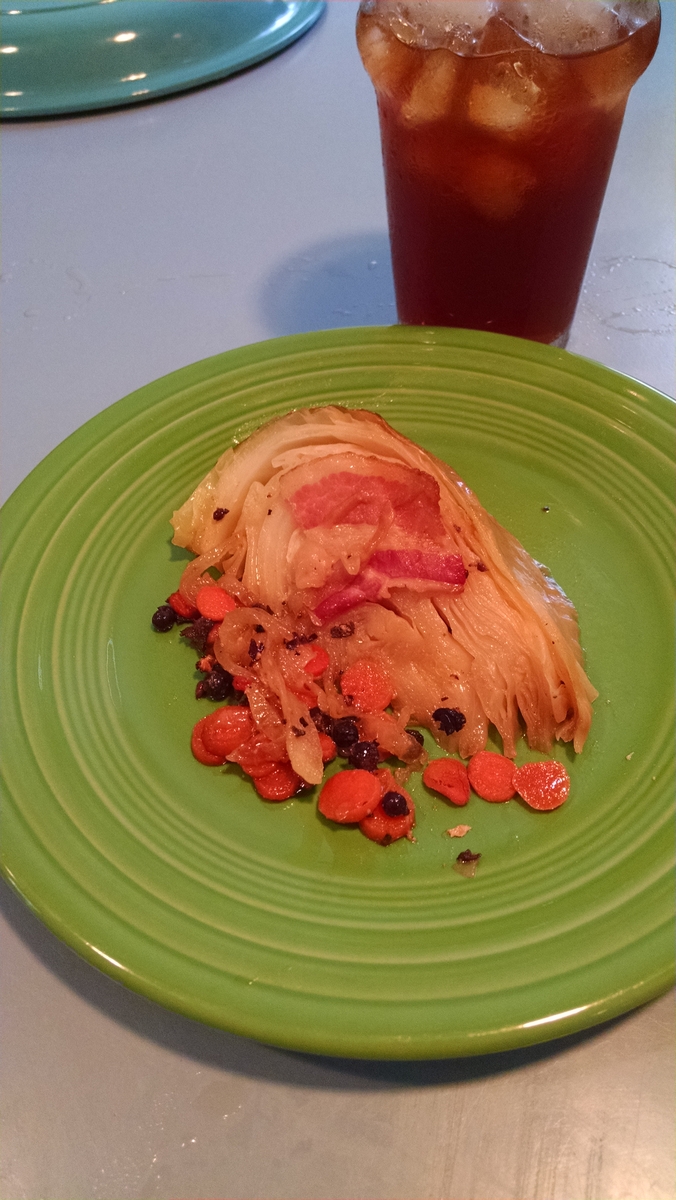 This is an easy recipe, good for when you have a cabbage from your CSA and you really don't want any more cole slaw...
 This is a delightfully light celebration of late spring.
 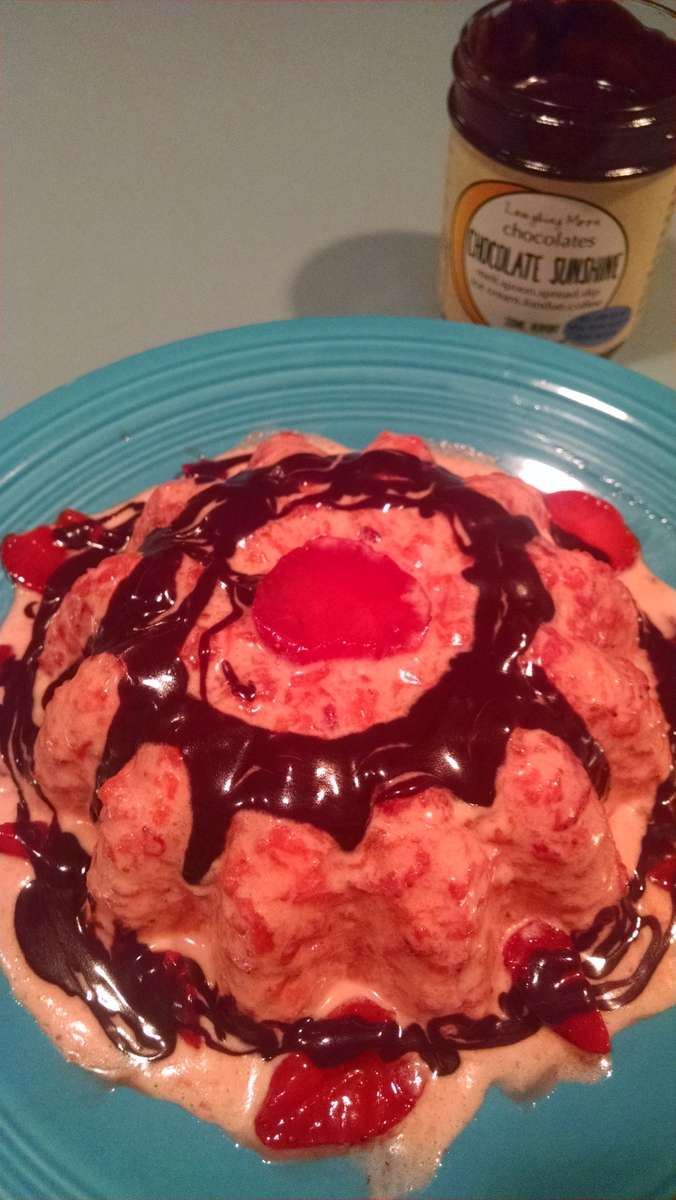 What a treat! This early summer dessert is easy to make and it looks and tastes like something special.
  Here's another gem from